
- This event has passed.
Design Paradox Challenge: Bridging Theory and Practice
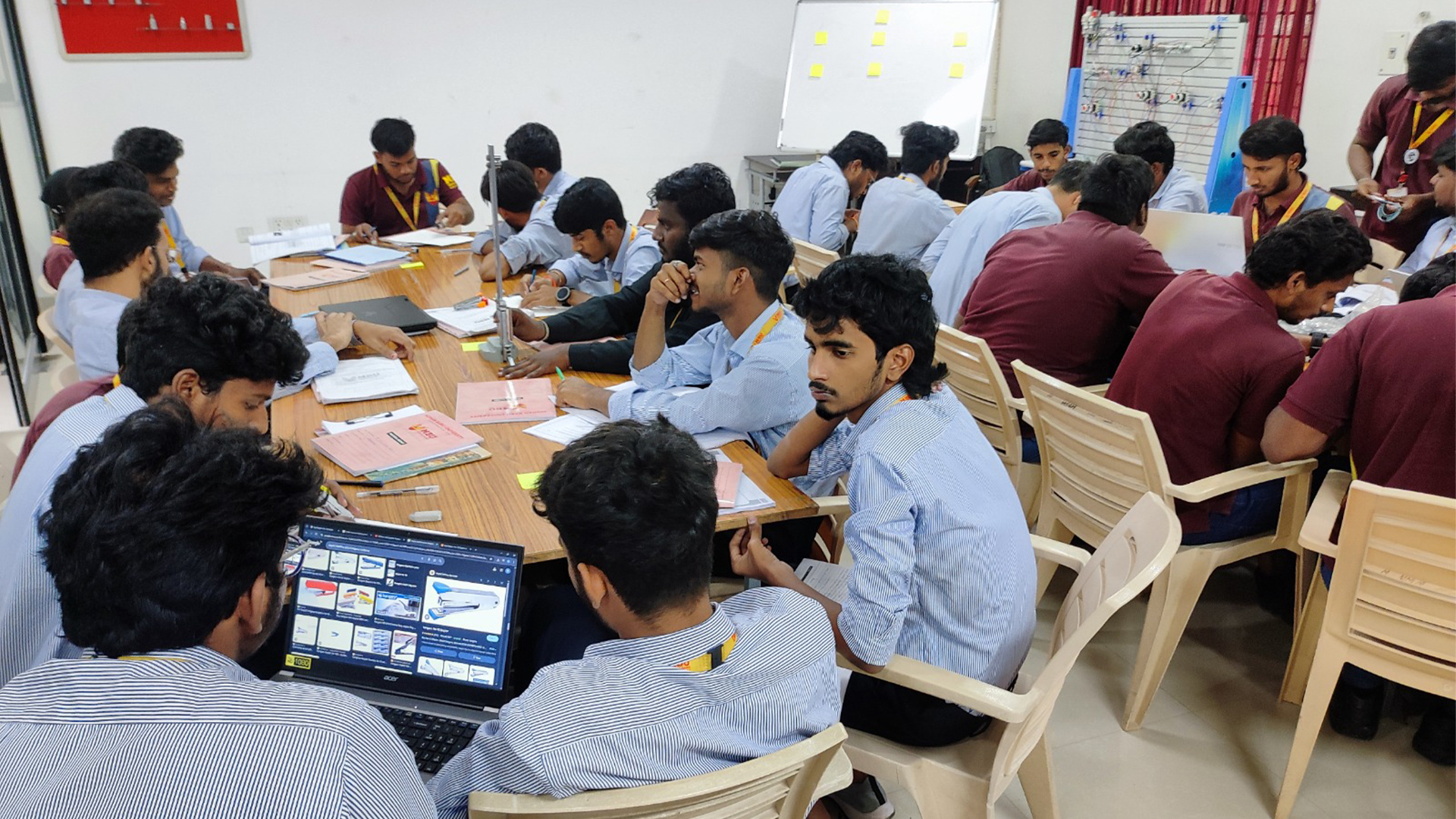
The Automotive Club of the School of Engineering, Department of Mechanical Engineering, organized an engaging and hands-on event titled “Design Paradox Challenge” on 7th November 2025, from11:30 AM to 1:00 PM at the Metrology Lab. The event brought together enthusiastic students for a unique learning experience that combined creativity, technical skills, and teamwork.
The main aim of the event was to help students understand how mechanical products are designed and how they function. By working directly with real-world objects, the activity encouraged students to explore the inner workings of mechanical components. It also aimed to improve their skills in using precision measuring tools and to inspire them to think creatively about how designs can be improved.
The event was coordinated by Dr. N. Anantha Krishna, Associate Professor, Department of Mechanical Engineering, along with Mr. Lokesh, a B. Tech V Semester student. A total of 33 students from III B. Tech Mechanical Engineering participated in the challenge. The students were divided into seven groups, and each group showed great enthusiasm and teamwork throughout the session.
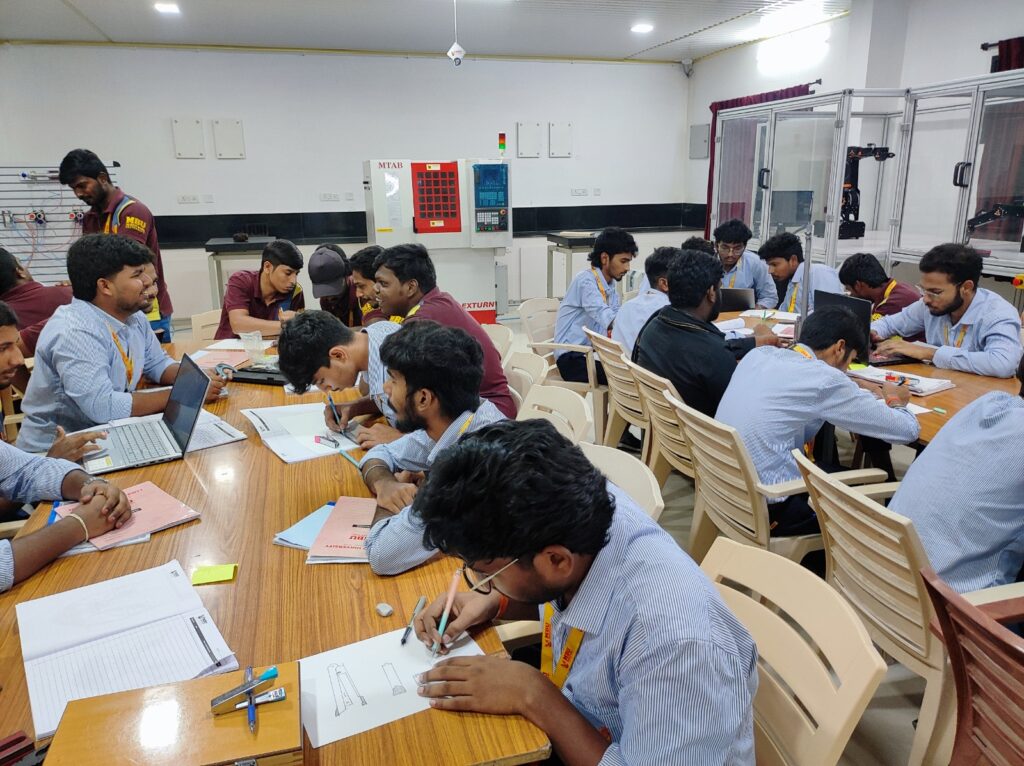
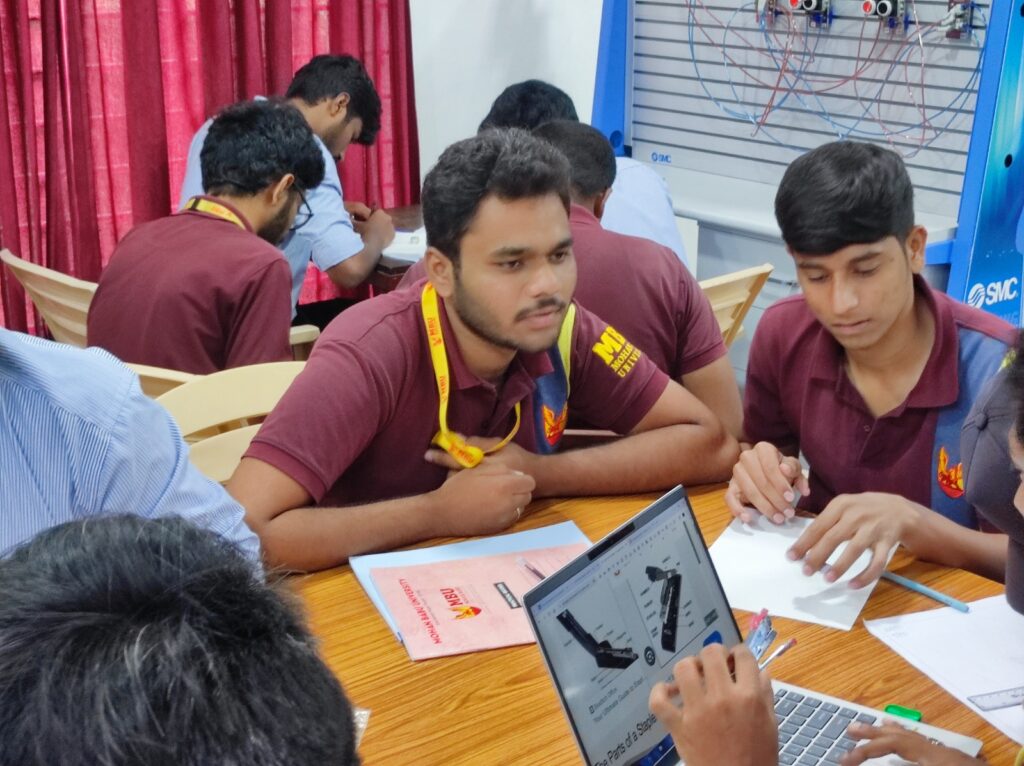
During the activity, each group was given a stapler to dismantle and study. They carefully examined the parts and created detailed drawings using isometric and orthographic projections, which helped them better, understand engineering graphics. The students then used metrological instruments like Vernier calipers, micrometers, height gauges, and toolmakers’ microscopes to measure the components with precision. Based on their findings, they suggested improvements to the stapler’s design, focusing on better functionality, ease of use, and manufacturing efficiency.
The challenge gave students a chance to apply what they’ve learned in class to a real-life object. They gained hands-on experience in measurement and design, improved their observation and analytical skills, and learned how to work effectively in teams. The event also sparked their creativity and encouraged them to think like engineers solving real-world problems.
At the end of the session, the organizers expressed their heartfelt thanks to all the participants for their active involvement and positive spirit. They appreciated the students’ dedication, teamwork, and innovative ideas, which made the event a great success. The Design Paradox Challenge proved to be a meaningful and enjoyable learning experience for everyone involved.